Fertilizing & Nutrients
Today there is a lot of inaccurate information about fertilizing plants. General advice is quite common but specifics and reasons why this or that works is often difficult to pinpoint. Overall it seems that general growing advice is not very progressive in figuring out issues and improving growth speed. I think there is a lot that can be improved if more growers become aware of the various factors in plant nutrition so they can improve their growing.
Plant fertilizing is a complex dynamic web – a single nutrient ratio changed can significantly change the results and may require other nutrients to be changed to maintain balance. This is why sometimes two completely different NPK fertilizers can produce near identical results. A high phosphate fertilizer used constantly can produce deep green leaves with high Fe levels added, at the same time a lower phosphate fertilizer can produce the same green with lower Fe required. Similarly, a tomato can require a high ppm of Magnesium added, but simply lowering the Ca nitrate level reduces the need for adding so much Magnesium. It is a balance and the key is to get the best growth with ease of use that is not excessive.
Not as much in orchids but in the hydroponic world there is a steady interest in trying to find the next “competitive edge.” Things like using silica, cobalt, etc. are often used to promote better growth, but the problem I see with this is that the base fertilizers they use often have a lot of improvement to be made in the basic NPK ratios which would give them better results than chasing additives to improve quality. I suspect this has to do with the lack of research, at least public research, since many commercial greenhouses and Ag trials keep their research private for the industry so many fertilizers are based off of older research.
Basics of fertilizer and Nutrient absorption
Plants absorb clearly soluble forms of nutrients; however, they can also dissolve some insoluble forms and absorb them such as Calcium carbonate (strangely carbonate acts like a micronutrient in plants and improves growth even in acidic preferring species). This is not an accidental process either but apparently intentional action by the plants as they can release various acids, such as citric acid, to dissolve or chelate specific nutrients. There is also some scientific research suggesting some nutrients like iodide can be absorbed by plants from the air.
When it comes to easily absorbable soluble nutrients however, what is in the fertilizer does not directly correlate with the leaf nutrient analysis. Some orchids can be fertilized with 300 ppm of Nitrogen for example yet the dry leaf total will only be 1% Nitrogen- quite low in comparison with vegetables. The reason is the plants typically regulate most nutrients even if available at the roots or absorb some more slowly. The latter reason being why some micronutrients for specific genera has to be adjusted up just for the plant to absorb the same amount that a vegetable does at a very small given rate. Meanwhile there is some nutrients plants struggle to stop absorbing, for example phosphate is rarely over absorbed by any plant due to significant down regulators present in plants and this is proven easily with lab testing - however for Australian Proteas these down regulation processes are completely nonexistent due to the plant’s evolution in a low P environment. Thus, they are one of the few plants to actually get true P toxicity. Contaminants like Chromium are also easily over absorbed by essentially all plants and is a critical reason to confirm the water is free of heavy metal contaminants.
In fertilizers, we are aiming for something easily usable that provides the correct nutrient levels at the roots for the plant to end up with the correct in-leaf nutrient levels. Many companies especially for hydroponics sell liquid fertilizers... while are very easy to measure, but the issue with these of course is you are paying for water and the fertilizer is diluted. Considering a dry soluble fertilizer of the same container size will dilute to make more final solution, it is typically more cost effective. The next problem is nutrients when wetted will react eventually to some degree except for some very general NPK only fertilizers. Most chemists and fertilizer techs know that all the micronutrients supposedly “available” on the liquid fertilizer packaging is in fact, not fully available. This is especially true if Calcium is part of the liquid fertilizer as it is reactive; phosphate also will react with micronutrients even if chelated (since metal chelates partially dissociate when dissolved). The reacted nutrients are typically highly insoluble and unavailable to the plant and can be seen sometimes as floating precipitation although it is often invisible to the naked eye. Considering these things, a good recommendation is whenever possible use dry water soluble fertilizers and only dissolve it shortly before watering for maximum nutrient availability.
A good real world example of the nutrient reactivity is in tissue culture. MS media, Murashinge and Skoog, is often used but the pre-blended version from lab stores end up with different available nutrients when compared to mixing it yourself from the raw salts due to precipitates in the pre-blend. I had tried this myself and the results on growth in TC is indeed different which is a bit surprising.
For practical reasons, soil fertilizing is recommended. Sometimes foliar fertilizer can have success but it is for specific uses like correcting a deficiency and is limited due to low mobility of micronutrients even when spreader/stickers are used. It is possible to green leaves with N and Mg foliar sprays, but something like Fe sprays are troublesome and often end up with spotted green leaves rather than a uniform color.
The Nutrients
Nitrogen
Nitrogen is the major macronutrient, available primarily in 3 different forms to plants (amino acids are not practical). It heavily affects speed of growth of the plant, is critical for chlorophyll so deficiencies cause yellowing, and typically sets the baseline for the ratios required of other nutrients. Lack of increasing size is often a Nitrogen issue.
Nitrate typically raises soil pH when used and is useful to keep the soil pH consistent. It is the standard for crop plants and is very useful for many tropicals, especially aroids/Musa etc. However, unlike say, lettuce, which is heavily bred for crop production, most tropical plants require another form of nitrogen to get deep green leaves when using nitrate. If only nitrate is used on orchids the leaves often develop a sickly yellow, and even if green, lack a shine. With some ammonium added to the nitrate they green up. This is true especially for highland plants which are typically from very infertile areas due to high rainfalls stripping nitrate (very easily lost via rainfall in agriculture due to being an anion). So those plants are typically adapted more to Ammonium unlike more lowland plants like bananas which are from more fertile soils. Once absorbed, plants require Molybodenum to convert nitrate to ammonium in the leaf.
Ammonium is the cation form of Nitrogen and as such it typically acidifies soil. It is absorbed directly via the roots but if left in the soil it often converts to nitrate after a few days. Many undomesticated plants utilize ammonium to some extent and can process it directly without needing Mo. The effects of greening for orchids, carnivorous plants, etc. is very impressive and cannot be replicated with pure nitrate fertilizers.
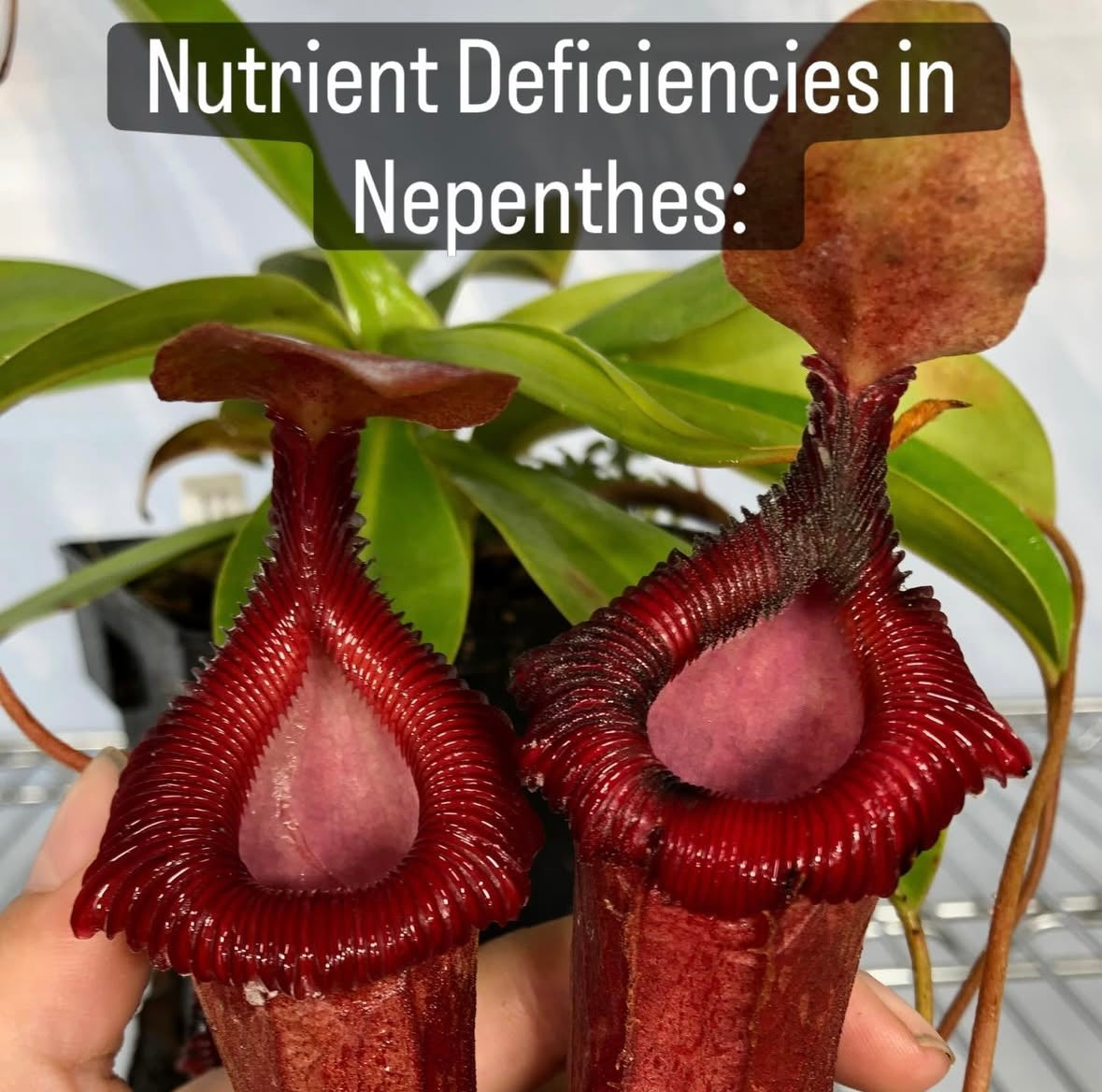
Urea is an organic form of Nitrogen and as such it does not register on a TDS meter except for ionic contaminants. When used via the soil it raises pH (due to converting to Ammonium bicarbonate) and then slowly acidifies the soil. Urea like ammonium can be absorbed directly by plants, it is not unknown, there is even papers on foliar absorption. However, urea can be very strong for some plants such as Nepenthes, which is why even Borneo Exotics stopped using high urea fertilizers. For many orchids like Phalaenopsis however it is an excellent form of Nitrogen if pH is managed. Meanwhile some genera like Homalomena, it is practically essential for the plants to grow normally – no amount of only nitrate/ammonium fertilizers will satisfy the plant until urea is added. In contrast, for vegetables, urea’s primary use is to convert to nitrate and is used solely in that role in commercial agriculture.
Phosphate
Phosphate is an often-underappreciated nutrient. It is often said it promotes flowering but for orchids this does not appear to be true in any practical manner. However, it can give a very good robust root system! Phosphate is a strong pH buffer and for the majority of plants has no toxicity level, although overuse is not practical due to blocking some micronutrients. In commercial nurseries a very low P and high nitrate fertilizer is used to produce dwarf plants with deep green leaves. The most common P deficiency often goes unnoticed, a deficiency causes stunting and slower than normal growth. In cultivation some species of plants are nearly permanently deficient, it appears that in-situ symbiotic fungi provide them with extra P but they are absent in cultivation.
Potassium
Perhaps the most “critical” of the macronutrients. Potassium is crucial for flowering and seed/fruit set. Since it is highly mobile upwards when deficient, lower leaves go deficient first causing a crisping tip or edges, often with a “fire line.” Potassium deficient plants can appear wilted or dull colored and are prone to rot. Severe deficiency is very common during flowering. There are some reports about Potassium toxicity in orchids, however laboratory testing does not prove any of these claims - and they have been checked extensively by commercial nurseries. Such K toxicity reports are almost always actually from soil pH being very acidic but this is rarely checked. The risk of K deficiencies such as total collapse if too low, far outweigh claims of overuse. Many fertilizers are slightly deficient in K due to costs (K is a more expensive nutrient) and also because the substrate typically supplies the remaining K balance - this is not the case however for inert substrates. In the Netherlands for Phalaenopsis, a minimum 200 ppm of K is used in their commercial feeding.
Sodium is a closely related nutrient to Potassium and plants do absorb it as a substitute for K. However, high levels of Sodium is very toxic to plants due to the dehydrating effect. The common growing media, coco coir, has high levels of insoluble Sodium compounds that can be “dumped” on the plants after some months of growing unless buffered beforehand to remove it.
Calcium
Calcium’s effects are more noticeable in crop plants where the fast growth requires high levels of soluble Ca to keep up with growth of the tissues especially since it is immobile. Tropical plants typically require lower Ca levels due to the slower growth, in some cases even hard water being sufficient for normal growth. Calcium can easily be supplied via dolomite lime even for acidic preferring species (lower amounts given than calcitic species). The carbonates, being a carbon compound, does act similar to a micronutrient and improves growth. However, soluble forms like Calcium nitrate can be used. In soluble compound fertilizers it has to be carefully mixed since CaNo3 can easily react with other nutrients. It is also very hygroscopic and absorbs moisture from the air if given the chance. When Calcium nitrate is used on orchids and carnivorous plants it is *necessary* to adjust other nutrients, specifically Ammonium must be supplied otherwise there is a risk of stunting from too much Ca. If these other considerations are done it works very well for growing orchids. These concerns are not an issue for crop plants like tomatoes.
Magnesium
Magnesium is very mobile and can impressively green up the leaves very quickly, even greening up already yellow old leaves, not just new growth. Deficiency is paleness and yellowing chlorosis of the lower leaves. It often occurs with K deficiency, complicating symptoms. In Nepenthes it appears to be easily absorbed faster than K so typically Magnesium sulfate (Epsom salts) is supplied to clear Mg deficiency first to then see what other issues remain. When Mg levels are sufficient, lower leaves remain green and last much longer without dying off and growth speed is faster. A regular feeding of 100 mg/L of Mg sulfate works very well for many tropical plants or a monthly drench of 500 mg/L - around the same dose as used for lettuce.
Sulfate & Chloride
Both of these are essential nutrients without necessarily clear symptoms. Chloride is easily absorbed and heavily mobile in leaf. Since they are in lower required quantities and both are ubiquitous in growing medias, it is not very common to get either as a deficiency. This said, even growing some fast-growing genera in a relatively inert media like rockwool with no Cl or S supplied can still grow as if nothing is missing which can be a bit mysterious (Sulfate does show as a pale yellow in new growth in some plants, similar to a micro issue). However, in general being deficient does slow growth and increase proneness to diseases and is a confirmed problem. Typically supplying sufficient levels of both is the best option rather than trying to ID either problem when they come up and is why a small amount of chloride is present in our fertilizers.
Iron
Iron is a very important micronutrient. For vegetables it is the micro needed in the highest quantities, for tropicals typically lower levels are sufficient. Due to Fe reacting with phosphate, it is often chelated. The best commercial chelate is iron EDTA, the other chelate types should be avoided for tropical plants. Iron sulfate can also be useful if properly used but is typically needed in higher levels due to reacting easily and is not practical for mixed fertilizers. Iron deficiency makes a pale chlorosis when slight, when severe the chlorosis becomes very visible or can evenly bleach new leaves white. Spraying chelated iron is ineffective for many genera due to the low penetration and immobility of iron to fully green the leaves.
Manganese
Manganese is an easily overlooked nutrient that when deficient looks like a mild iron problem. They are distinguishable but unfortunately there is no way to convey the difference except for hands on experience. Manganese deficiency dramatically slows down growth and makes plants prone to rot. In orchids and carnivorous plants, in-leaf micronutrient levels have Manganese higher than Fe in healthy green plants.
Zinc
Zinc is also elevated in many orchids but less so in carnivorous plants. It is very important to prevent root tip oxidation.
Copper
Copper for most plants is used at essentially the same rate. Unlike some other micros, it is typically not beneficial to raise it very high as they absorb it too easily sometimes. This is strange since some Nepenthes are documented to grow in high Cu areas, clearly the Mamut Copper mines. This said, Copper traditionally is a very good fungicide used by the old commercial orchid nurseries and the plants grew great. As a fungicide the pH of the solution is kept very high using Calcium hydroxide to prevent overabsorption foliarly. You can also mix kocide with Calcium hydroxide to easily seal cuts on plants such as a broken Amorphophallus corm etc., it is very safe that way although using Captan is cheaper.
Boron
Boron is a little appreciated nutrient that is very useful. It can help plants stuck in growth, and like Zinc is important to stop root tip oxidation. It is well documented that in cruciferous crops, a boron deficiency causes a black inner rot... this is the same rot that often plagues Amorphophallus growers trying to grow A. pendulus, gigas, etc.
Molybodenum
A critical nutrient when nitrate is used. Most fertilizers are deficient in Mo and fixing this improves the growth of many plants. A deficiency appears similar to a K deficiency but on the medium and upper leaves too, a strange crisp fire line running the edges of the leaves, but a bit more of a black crisp rather than brown. This is from nitrate buildup at the edges of the leaves due to not enough Mo to convert to ammonium.
Nickel
The last confirmed essential nutrient. Essentially non-existent in commercial fertilizers, most plants absorb it from the substrate or water contaminants. Even if they receive none, the plants are confirmed to recycle Ni from the seed they sprouted from all the way to flowering and seed set of the next generation, which is how it was discovered to be essential. Based on my own lab testing, it is true Nickel is always present even in unfertilized plants. The amount used by plants varies widely between genera and it is used for nitrogen processing in the leaves. Xavier Loubresse and myself are the only growers confirmed to use Ni in orchid cultivation, however it is hard to recommend it since useful levels fluctuate heavily by genera and ideally fertilizers should be suitable across a wide range of genera.
Clearly, all the nutrients should be supplied to the plants via a blend which results in better nutrient absorption. For orchid growing we recommend our orchid fuel, for aroids/begonias use our green fuel.