Common Nepenthes Nutrient Deficiencies
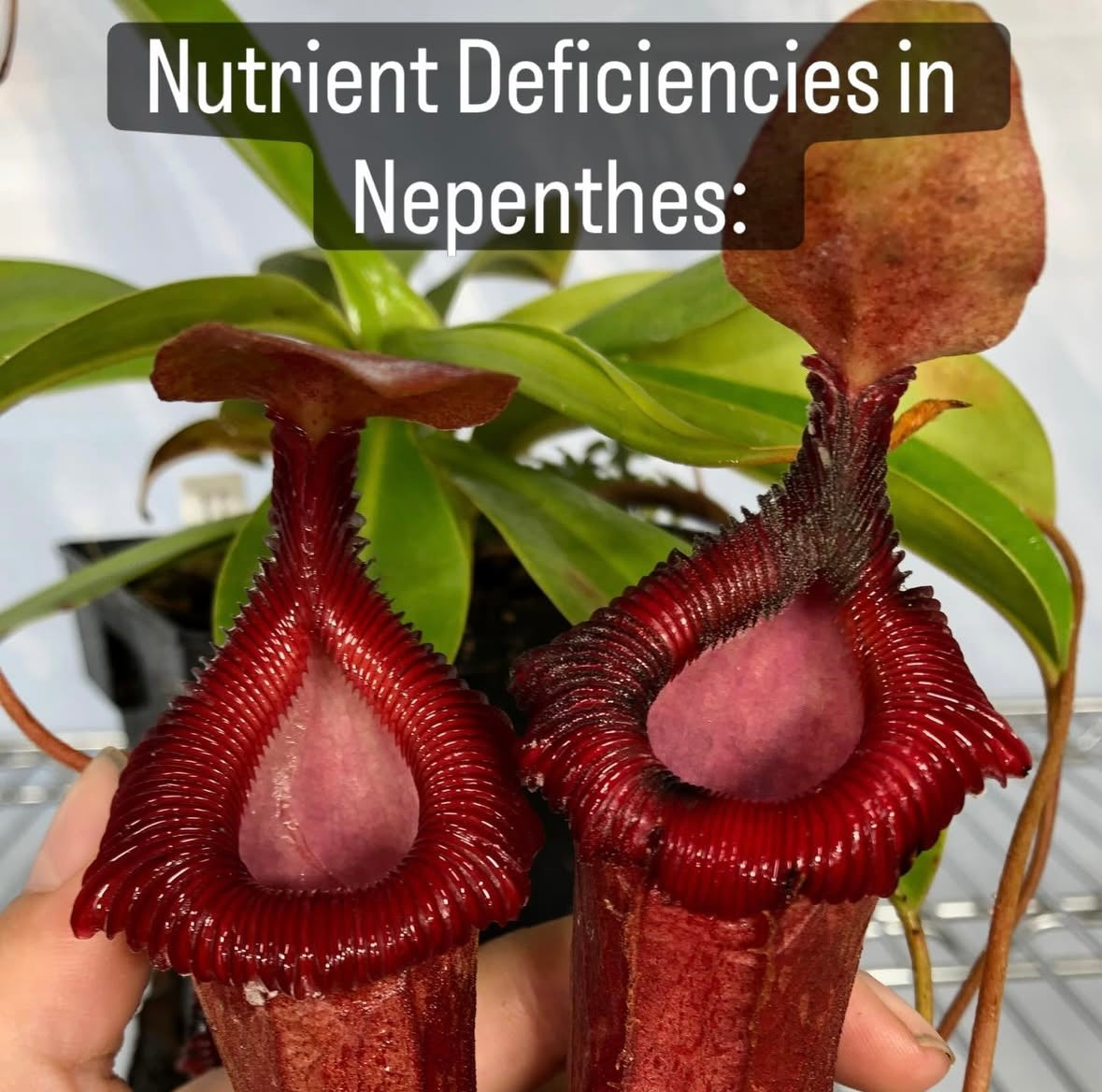
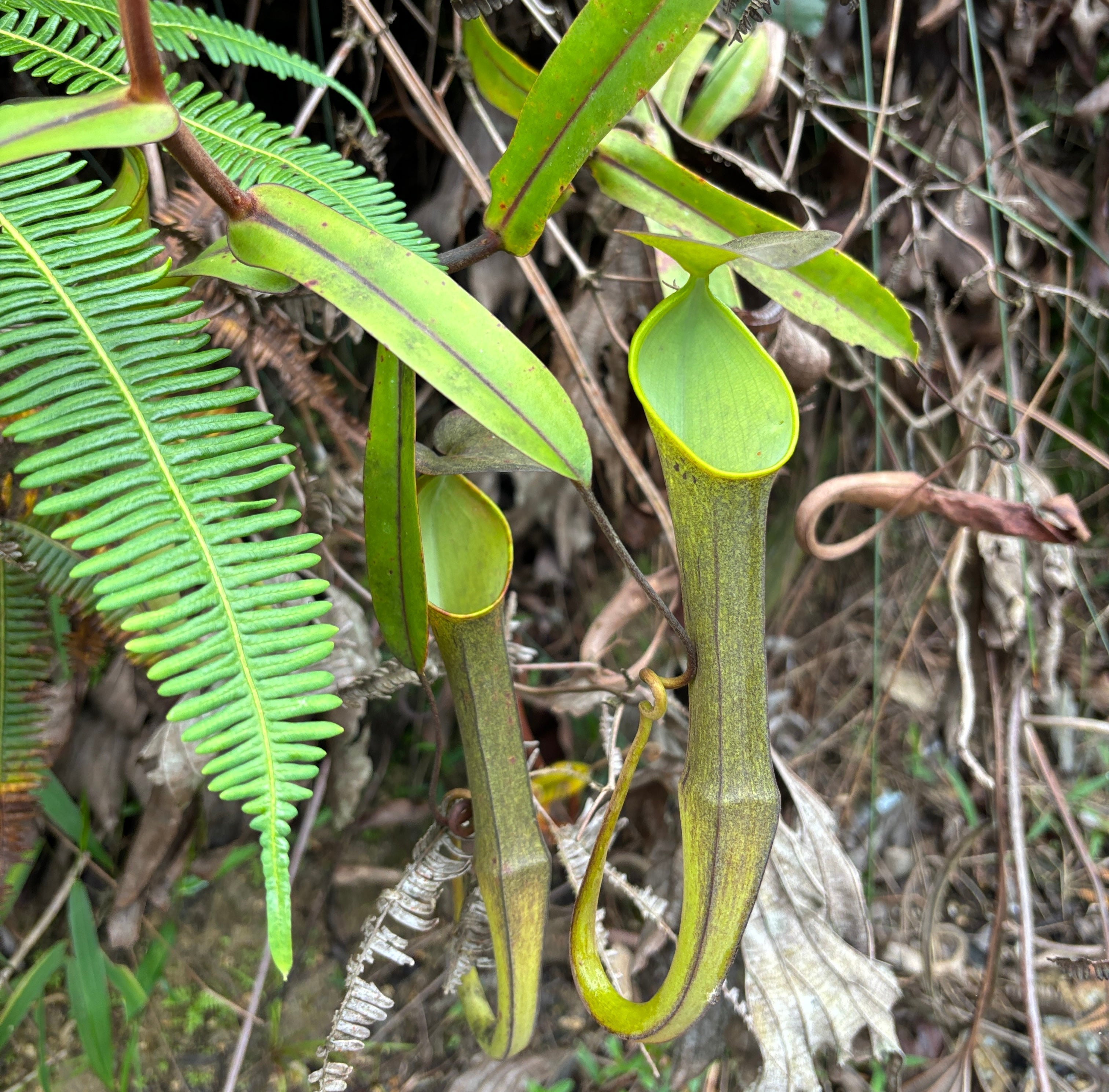
Nepenthes (pitcher plants) often have nutrient deficiencies in cultivation, some nearly chronic. Some of these symptoms are similar to orchids and other plants, however, I think it is easiest to visualize as they can be difficult to tell apart so I have attached photos below as examplees.
This does not show all the nutrient deficiencies that exist, but the ones that I see very common in collections and can improve growing greatly if fixed. Surprisingly, Nitrogen which drives a lot of the growth, I have not found to give as impressive changes as other nutrients but is critical for sustained growth otherwise reverse leaf jumps will occur. Calcium is essential, with many Nepenthes growing on limestone in the wild, but I have not found them to be Calcium hungry and prefer lower Ca fertilizers to avoid issues.
The below information is verified as accurately as possible from lab tests I did using the leaves and comparisons with controls (best growth plants). I also did many experiments trying to resolve various issues and pinpoint what the true cause was and what led to improvements. The background research and basis of most of the data and theories for reference is from the orchid world, specifically commercial Paphiopedilum & Phalaenopsis growing which share many cultivation similarities with Nepenthes; also tips from other Nep growers like Wistuba.
For correcting issues, I provide some further information below where I think it is easy to apply and fix, such as Magnesium or Iron. For the macronutrients, pitcher feeding can be effective, but I do not recommend that as a solution for micronutrient issues due to absorption problems. For micros, root fertilization is most effective. I find foliar fertilizing any nutrients, not very effective but it might work well in other grower's conditions especially for Nitrogen supply.
Naturally, I recommend my own fertilizer here for fixing these issues as the nutrients are adjusted and different from other fertilizers for sale. It is simply easier than buying the individual nutrients and trying to measure small amounts with a mg scale. However, there are other solutions and I think good results are possible for anyone with some experimentation. So to start:

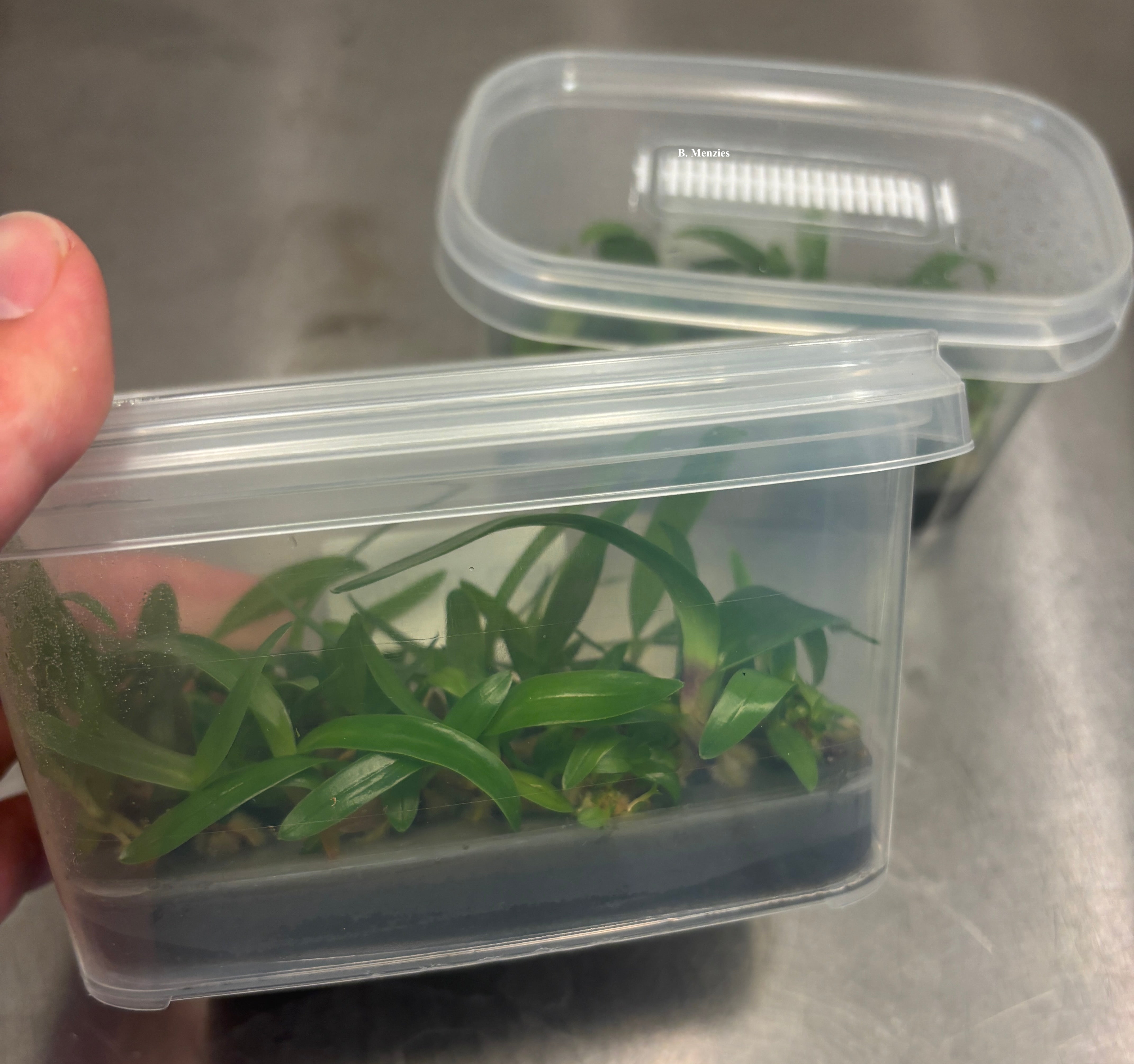
In this photo of Nepenthes seedlings, the baby leafs (cotyledons) are pale and bleached out. The proto-pitcher structure are not reliable indicators of deficiencies due to the modified use/high pigmentation; just the photosynthetic leaf part is typically used for judging potential deficiencies. This bleaching color in seedlings is from Iron (Fe) deficiency. Due to the small root system, uneven soil pH, etc. the seedlings have a hard time absorbing iron when tiny. High levels of Nitrogen can increase metabolism, increasing Iron demand to keep up and thus worsening symptoms. If severe, the seedlings will be very prone to rot from pythium/phytophthora. These issues can be prevented using Fe EDTA drenches (around 40 mg per L is OK) and also Azoxystrobin (Scott's disease Ex). Very few fungicides work on damping off.


The purple or red splotches on the leaf edges from sunburn are a classic symptom of Phosphate deficiency, even vegetables expressing the same symptoms. The purpling is an attempt by the plant to protect the leaf from further photosynthesis, thus reducing phosphate demand within the leaf. Hence improvements with reduced lighting. Phosphate deficiency is associated with stunting.
It should be noted that some species/hybrids, have a natural red pigmentation, specifically red streaks running down the midrib, or blushed new leaves that should harden to a deep green. However, the excessive red found in cultivation in N. peltata, absent in many wild photos, appears to be a phosphate issue and not natural.
Nepenthes have a difficult time absorbing phosphate. Theoretically, in the wild they most likely receive phosphate via mycorrhizal fungi, same as orchids in-situ. However, this is not feasible in cultivation to replicate, so typically higher P fertilizers have to be used or given occasionally to fix. Commercially for maudiae Paphiopedilum production, high P bloom boosters are used for regular vegetative growing so it is known in the industry. This includes fertilizers like 10-52-10, Potassium phosphate, or an old generic recommendation, Jack's 10-30-20.


Potassium deficiency is a very common issue. It is a bit easier to fix than phosphate problems, but is nearly chronic in veitchii & truncata. In old leaves, the edges crisp with a "fire line," it is very common for Neps to have a combined deficiency of both Potassium & Magnesium. Mild deficiencies in new growth is a basic green (rather than vibrant dark green) with less robust growth and prone to wilting in low humidity (Potassium is essential for water regulation in leaf). When flowering, Nepenthes use a lot of the Potassium from the old leaves to support the rapid flower growth, causing rapid lower leaf die off. If the deficiency is severe, the seeds will fail and be small. Potassium phosphate or Potassium nitrate can improve symptoms.

Perhaps the most widespread deficiency with the most noticeable improvements if treated. Pictured is Magnesium deficiency in dubia hybrids. Note the lower leaves yellowing, shortly to turn black and die off. The symptoms differ from Potassium since there is no "fire line" for the crisping process, leaves tend to yellow and just collapse to black instead. Wistuba, Borneo Exotics, Florae, myself etc. all use higher than normal Mg fertilizers or Mg drenches to fix this issue so it is well established. Epsom salts (Magnesium sulfate) can be used as a soil drench at 1/4 tsp per gallon (200 mg/L) without flushing, it is very safe for the purpose and higher rates can be used safely.
A side note, some of the black soot that occurs on leaves/pitchers does seem to disappear when Magnesium is fertilized. I vaguely recall there being some correlation in other plants.

An example photo of a combined deficiency, often multiple deficiencies occur at the same time making symptoms harder to tell apart. For complicated issues, I recommend trying to fix something basic first, whether repotting to remove old media with a low pH (Sphagnum acidification can cause strange foliar colors) or Magnesium drenches to eliminate basic deficiencies first. In this example, the green parts of the leaves are rather pale and chlorotic, indicating the iron deficiency, but the lower leaves also are phosphate deficient, causing the strange red spotting with sickly green in between, rather than an even red blush.

A harder to detect issue is Manganese. The leaf pictured is green but not particularly deep green, it could pass as healthy. However, this is reinwardtiana, a species very robust and fast in the wild but extremely slow in cultivation and prone to rot. Adding Manganese makes this species and other "fast in wild; slow in cultivation" species like ventricosa, gracilis, stenophylla, etc. much more weedy and robust, same as in orchids with Paphiopedilum needing higher Manganese. Adding high Manganese can compete with Iron absorption however, so should be managed appropriately.

The pale bleached out newer leaves from iron deficiency. Depending on species, leaf thickness, Fe deficiency can be a classic chlorotic look, same as vegetables, but I find the symptoms more vague in Nepenthes typically, causing it to be overlooked usually. Wistuba uses Iron EDTA as a foliar spray to fix this, however I find this causes green spotting rather than an even greening and has to be used in very high ppms. For this reason I recommend root drenching with Iron EDTA.